Saturday, November 07, 2009

Peter Marshall's Erroneous Christian Nation Response to the Texas Controversy:

Okay there was this big hubbub over Peter Marshall and David Barton being appointed to some kind of Texas public education panel on historical issues. Even though I believe those two produce extremely shoddy scholarship (as I will demonstrate below) I will note that Daniel Dreisbach, also appointed to represent the religious conservative point of view, as far as I have assessed his work, produces top notch work.

But the point of this post is to show Marshall's academically shoddy response to the controversy. Marshall recounts and responds to the controversy here.

Here is where Marshall steps in it. He attempts to argue against the accurate claim, written by a critic of him and Barton:

"Actually, the founding fathers had many things in mind when they drew on a variety of sources -- Greek, Roman, biblical, Enlightenment -- to invent a new nation."


Rev. Marshall makes an egregious error when he responds:

Research has revealed that Enlightenment philosophy was far less influential in the thinking of the Founding Fathers than has been taught in recent decades. A 1984 article in the American Political Science Review revealed that 34 percent of the most important quotes used by the Founding Fathers in the creation of the Constitution came directly from the Bible. True Enlightenment sources were quoted only 7 percent of the time. So the Bible turns out to be five times as influential as the Enlightenment.


He's of course referring to the much misunderstood study that Christian Nationalists cite by Donald S. Lutz, et al. Lutz is a respected scholar and the study as far as I have read it is valid. It notes the Bible was cited quite a bit during Founding times. And it was mainly sermons -- a common form of literature back then -- from where the Bible was cited. NOT necessarily quotes from the writers, signers, or ratifiers of the Declaration or the Constitution, but sermons by ministers. Yes, of course sermons given in professing "Christian" churches are going to cite the Bible. You can read many of the Founding era sermons here (note I don't know of the relationship between these sermons and the ones Lutz studied; I do know that the Sandoz collection reproduces the most influential sermons of that era; and interestingly it was unitarians like Jonathan Mayhew, Charles Chauncy and Samuel West using creative natural law thinking to explain away Romans 13's prohibition on revolt who most profoundly influenced the American Revolution).

It's important to note the distinction between the Declaration of Independence and the US Constitution. Here's where Marshall stepped in it: He claimed the Lutz study found "34 percent of the most important quotes used by the Founding Fathers in the creation of the Constitution came directly from the Bible."

It actually finds the very opposite, that although religious rhetoric abounded during the revolutionary period (and during other parts of the American Founding), when it came time to framing and ratifying the Constitution, the Bible's prominence disappears and that Enlightenment rationalism dominated. As that very study puts it discussing the specific years 1787 and 1788:

The Bible's prominence disappears, which is not surprising since the debate centered upon specific institutions about which the Bible has little to say. The Anti-Federalists do drag it in with respect to basic principles of government, but the Federalists' inclination to Enlightenment rationalism is most evident here in their failure to consider the Bible relevant.


When you actually look at what the Founding Fathers -- not just Washington, Franklin, Madison, Morris, Hamilton and Wilson (the "key Founders"), but the entire group of framers -- said during the Constitutional Convention, and what the "key Founders" wrote in the Federalist Papers, we get a whopping ZERO citations of the Bible for the specific provisions of the Constitution. As Gregg Frazer put it:

In the hundreds of pages comprising Madison’s notes on the constitutional convention (and those of the others who kept notes), there is no mention of biblical passages/verses in the debates/discussions on the various parts and principles of the Constitution. They mention Rome, Sparta, German confederacies, Montesquieu, and a number of other sources — but no Scripture verses.

In The Federalist Papers, there is no mention of biblical sources for any of the Constitution’s principles, either — one would think they could squeeze them in among the 85 essays if they were, indeed, the sources; especially since the audience was common men who were familiar with, and had respect for, the Bible. The word “God” is used twice — and one of those is a reference to the pagan gods of ancient Greece. “Almighty” is used twice and “providence” three times — but neither is ever used in connection with any constitutional principle or influence. The Bible is not mentioned.


I think this is what historian Clinton Rossiter meant when he noted, "The Convention of 1787 was highly rationalist and even secular in spirit."

To which Marshall responds, "That's not even remotely true. Rossiter was a respected historian, but he got this one wrong." No. Rev. Marshall is the one who peddles things that are "not even remotely true."

Tuesday, November 03, 2009

Yes We Are Hypocritical:

For cringing at the thought of slaughtering dogs and cats for meat but not cows and pigs.

I'd never go vegan and see nothing wrong in principle with eating animal products like cow milk or chicken eggs. However, I do see why slaughtering mammals is morally problematic. I feel less sympathy for fish, fowl and reptiles because they can't feel pain. I'm just kidding about the last part. It's perhaps because they are more distantly related to humans and less intelligent and emotional.

I'm not sure what the term is for someone who just doesn't eat mammals but everything else is fair game; but I could see myself at least trying that diet out purely for ethical reasons.

Sunday, November 01, 2009

The Strengths and Weaknesses of Invoking "God" in Political Arguments (In Short, God Yes, Revelation No):

My readers know that I have conceded, along with some very notable left-liberal political thinkers like Jeremy Waldron, Paul Sigmund and Maurizio Viroli that God is useful, arguably necessarily to make political-moral norms binding in an "ought" sense.

What follows then is a comment that demonstrates the limits of sectarian arguments in politics. It short, yes, tying things to God helps clinch why it's ultimately wrong to steal from people and kill innocents (the postmodernist notes all arguments ultimately rest on unproven and unprovable moral premises; tying these premises to God invokes the ultimate source of non-negotiable authority). But it does not follow that quoting verses and chapters of scripture as what God thinks to "settle" political/moral matters is useful, effective or -- because I have an interest in the subject -- what America's Founders had in mind.

John Rawls, of course, recognized the inadequacy of sectarian religious based arguments in public discourse. Interestingly, so has the late Father Richard John Neuhaus whose seminal work The Naked Public Square stresses the need for religious conservatives to make "public arguments," -- those that appeal to folks who don't interpret the Bible the same way you do or perhaps don't believe in the same revelation.

So I'd like to think what follows is in the spirit of Rawls, Neuhaus and America's Founders.

I get accused of picking on the evangelical-fundamentalist "Christian Nationalists" too much. On the one hand, they are a very sizable influential part of the Republican Party's base. On the other, they haven't been all too successful in their political battles. Perhaps what follows below helps to explain why their verse and chapter quoting the Bible on behalf of religiously conservative political purposes has been less than fully effective.

The note that follows was to a politically conservative evangelical who argued contra atheism (which he asserted was inherently nihilistic and relativistic) in favor of a more "godly" view of politics and morals. Along the way he and others noted that biblical Christianity is superior to atheism and agnosticism because the Bible provides them with "moral absolutes":

I concede tying things to “God” does help to make them binding in an “ought” sense, at all times, everywhere (it solves the problem of relativism). However, not everyone believes in the same revelation that you do. Some folks believe in God, not the Bible. Some believe the Bible is partially, even if it’s most of which, inspired (that is parts of it are the Word of God, parts are interpolations). Some add additional Holy Books (i.e., the Mormons and Muslims). Some take the biblical canon and add rules discovered from the natural law (i.e., Roman Catholics and some other non-RC Christians). Some (the Jews) believe in your first Holy Book (the OT) but that your second book (the NT) is not the Word of God. And even among evangelicals, they interpret the same words, verses and chapters to mean different things. And, reading the same Bible as the inerrant and infallible Word of God, they differ on moral matters of such great import that they fight (or have fought) bloody wars over the matter.

We’ve discussed this matter in particular, say what you want about and disagree if you will with what Drs. Gregg Frazer and John MacArthur believe, but they are as intelligent, biblically learned, and devout evangelical-fundamental Christians as ANYONE on this [conservative evangelical] site. And they, in good faith, with COMPLETE biblical knowledge of the relevant verses and chapters of scripture, believe revolution is absolutely forbidden, the moral equivalent of witchcraft. And this includes the American Revolution. And indeed, a bloody war (the American Revolution) was fought with evangelicals, believing in the same inerrant, infallible Bible on both sides but differing in their interpretations.

We could say something similar about the Civil War with Abe Lincoln -- a man who though he believed in God, most certainly did NOT believe the Bible inerrant or infallible -- leading the victorious side.

In short, if you want to connect your favorite moral issues to God to make it binding, fine. However, trying to connect your absolute morality to verse and chapter prooftexting raises more problems than it solves.

It’s a non-starter — the equivalent of spitting in the wind — in the modern society that we live in where we are not all of the same religion and where ecclessiastical authorities do not rule politics from the top down.

That’s the only potential way for your divine command theory of political morality to work; and it arguably didn’t even work when tried; it led to the persecution of minority sects and burning of heretics at the stake.
Blomquist and Sheppard on Tillman and Stone:

If you remember a little while ago, I reproduced a very thoughtful law review article that criticized Geoff Stone's article arguing against the concept of a "Christian Nation." Interestingly, Tillman is neither a Christian, nor did his article argue for a "Christian Nation." Rather his article examined some of Stone's overstatements and conclusions that arguably didn't follow from the facts presented.

Now, Professor Robert F. Blomquist wrote "Response to Geoffrey Stone & Seth Tillman, Beyond Historical Blushing: A Plea for Constitutional Intelligence," 2009 Cardozo L. Rev. de novo 244. You can find that here and here.

Professor Steve Sheppard wrote "Response to Geoffrey Stone & Seth Tillman, What Oaths Meant to the Framers' Generation: A Preliminary Sketch," 2009 Cardozo L. Rev. de novo 273 and that is available here.

Professor Bruce G. Peabody wrote "Response to Seth Barrett Tillman," 2009 Cardozo L. Rev. de novo ___ (forthcoming) which is available here.

And finally, Seth Barrett Tillman wrote "A Reply to my Well-Meaning Critics, 2009 Cardozo L. Rev. de novo ___ (not yet drafted) available here.

I am remiss to say that I haven't yet read the new articles (because of time constraints). When I do I will be sure to blog about them in substantive detail.

Saturday, October 31, 2009

Cool:

Kansas DVD breaks the billboard charts at #5. I've been following their career for a long time; there's been a noticeable increase in their popularity since Guitar Hero. There's no doubt Guitar Hero had a big spillover affect on their increased population at concerts and popularity.

The DVD is great (as was their concert I saw a few weeks ago with the Trenton Symphony Orchestra). Their prog rock genre lends itself to the orchestration. Their current violinist David Ragsdale is a phenom and truly shines with the orchestral backing. Steve Morse, who recorded two albums with them, makes a guest return (their performance of "Musicatto" is about as good as prog rock gets) as does original writer Kerry Livgren. And on the bonus track, you see Kansas jamming on one of their tunes with BOTH Morse AND Livgren.

Buy it, among other places, here.

Preview Steve Morse with Kansas playing Musicatto before YouTube takes it down:

Reformation Day & The Founders:

"On Oct. 31, 1517, Martin Luther posted his 95 Theses on the door of the Wittenberg Palace church, marking the start of the Protestant Reformation in Germany," as this website notes.

Evangelicals and Roman Catholics still split on a number of issues, like justification. This document that attempted to bring Lutherans and Roman Catholics together claims that it "does not resolve the classic question whether such grace is God’s undeserved favor (Lutheran) or whether it is a spiritual power poured or ‘infused’ into the soul that enables one to love God and merit salvation (Roman Catholic).”

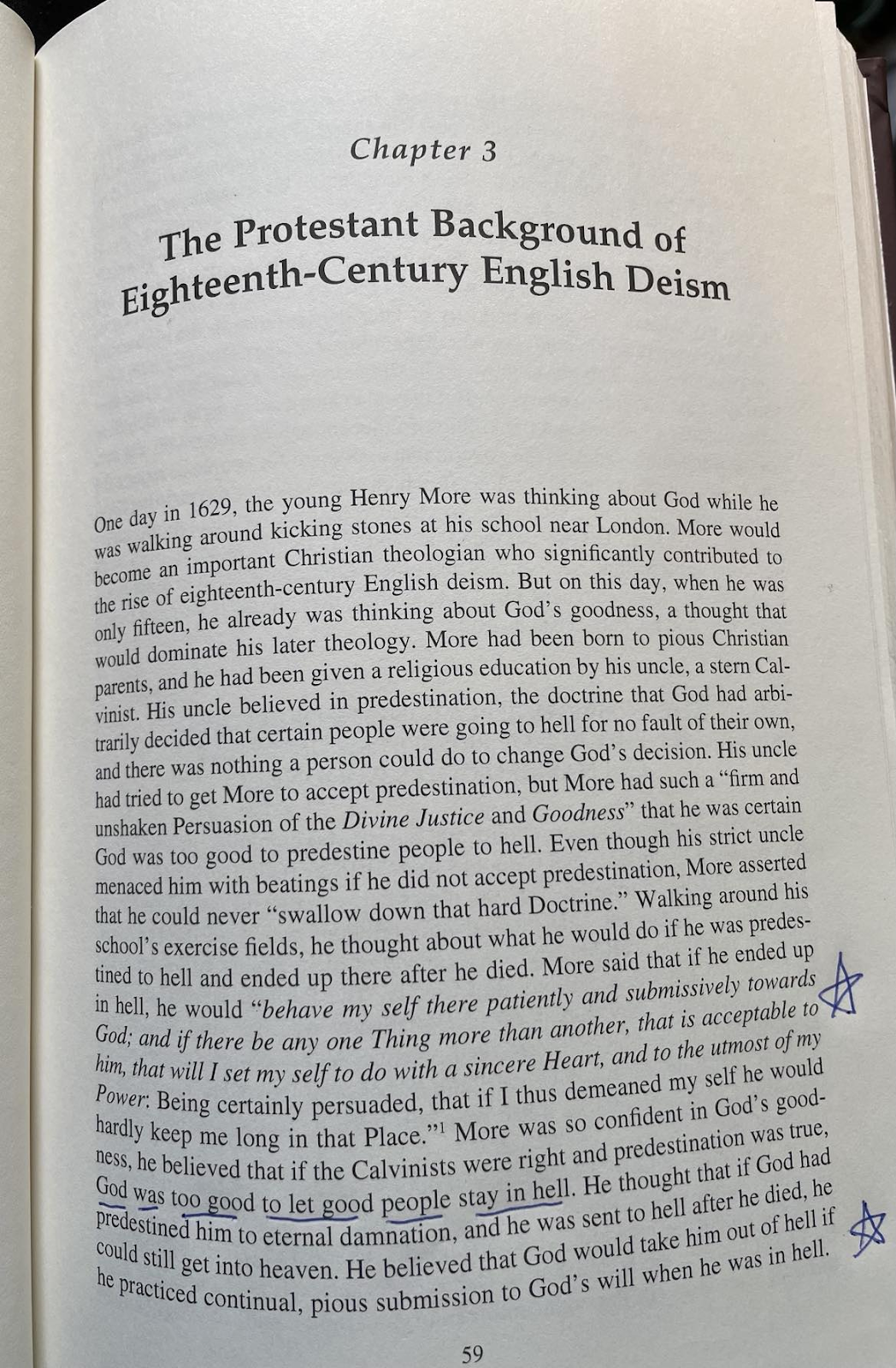
What I find ironic is, whatever their differences the Christian theology shared by Roman Catholics and evangelicals is far closer to one another than either are to the religion of the so called "key Founders."

For instance, here is Ben Franklin on justification, which is so different than the view of evangelicals and Roman Catholics that it makes their views look like differences without distinction:

Faith is recommended as a Means of producing Morality: Our Saviour was a Teacher of Morality or Virtue, and they that were deficient and desired to be taught, ought first to believe in him as an able and faithful Teacher. Thus Faith would be a Means of producing Morality, and Morality of Salvation. But that from such Faith alone Salvation may be expected, appears to me to be neither a Christian Doctrine nor a reasonable one….Morality or Virtue is the End, Faith only a Means to obtain that End: And if the End be obtained, it is no matter by what Means.

– “Dialogue between Two Presbyterians,” April 10, 1735.


Though George Washington was less specific when he discussed his views on the afterlife, there is not a SHRED OF EVIDENCE that George Washington held to a salvation scheme that was any more "Christian" than Franklin’s. Indeed, if anything Washington's view on the afterlife was LESS Christian.

As GW put it on the death of a loved one, suggesting she merited salvation through her good works, “She is now no more! But she must be happy, because her virtue has a claim to it.”

No orthodox Christian would state that someone’s “virtue” or works gives them a “claim” to eternal happiness.

Wednesday, October 28, 2009

Book: “The Forgotten Founders on Religion and Public Life”:

Gregg Frazer emailed me about this book published by University of Notre Dame Press and edited by Daniel Dreisbach, Mark Hall, and Jeffry Morrison. Dr. Frazer has a chapter, one that reflects his views, on Hamilton entitled, “Alexander Hamilton: Theistic Rationalist.” Other scholars are from Stanford, Virginia, Cal Berkeley, American Univ., and other prominent institutions.

Monday, October 26, 2009

Frazer Responds to "Joel Mark":

I've watched Gregg Frazer debate other evangelicals on Romans 13, in particular two of my evangelical co-bloggers, Jim Babka at Positive Liberty and "King of Ireland" at American Creation. While I've learned from their debates, I, a non-Christian observer, notice some arguing from different premises. I get the impression that they believe in different kinds of orthodox Christianity, though all three ARE "orthodox" in their Christology. I would term Babka and KOI "moderate" evangelicals, who hold some beliefs that the more fundamentalist types (like Dr. Frazer) deem heretical. Both Babka and KOI, for instance, believe in Darwin's evolution. And KOI has explicitly stated Genesis was an allegory and

that some of the verses used to prove an eternal judgement in a lake of fire are interpolations of the royalty of the time using religion to scare people into submission.

I have no proof other than the fact that the major religions of the world seem to have spread when the elite of that culture excepted it. I am suspicious that they pervert it to their own ends. I am afraid that Christianity may not be an exception.


Note, I have no problem with this kind of Christianity and were I to convert it would probably be to that kind as opposed to strict fundamentalist, verse and chapter citation that reads Genesis as a literal tale and believes Darwin's evolution false. However, if those are the premises to which one holds, Gregg's understanding of Romans 13 is the more authentic expression of evangelical-fundamentalism. Again, it's ironic that David Barton appeals to so many evangelical-fundamentalist, strict verse and chapter quoters.

So when I observe Gregg debating them, as opposed to the more moderate theological types, I see them playing by the same (or a more similar) set of rules. And Gregg always does an effective job refuting them on strict, Sola Scriptura fundamentalist grounds.

For instance, on this thread, an evangelical-fundamentalist Rev. named "Joel Mark" tried to justify political rebellion on biblical grounds when he commented:

The simplistic platitude that rebellion against authority IS rebellion against God applies in some cases and not others. It’s not that simple in Scripture or in real life.

The church herself does not have as her main mission political rebellion or activism. Using the church for political reballion as if that is her main mission is wrong-headed. But Christians are legal citizens too and they have a right to participate in dissent and/or rebellion, in many various forms–depending on the context. Where one draws the line between dissent and rebellion is a subjective call. But a right understadnig of scripture does not lead to a mandate for some sweeping ban on all social or political dissent or rebellion on all believers in all circumstances.

Moses leading the Israelites out of Egypt was more than dissent. It was a rebellion, a godly and just rebellion and God called Moses to lead it.

David respected Saul’s office as king but when David was de-throned, he allowed a civil war to dethrone his own son and get his throne back.

Jesus, on some occasions, rebelled against political, civic and religious aauthorities and they had the politica authority to have him killed unjustly for it.

The apostle Peter refused to submit to the command of the Sanhedrin to shut up.

Dietrich Bonhoeffer rose in rebellion against Hitler (even to articipate in an effort to assassinate him) and he did so rightly and bravely as a faithful man of God.

Martin Luther King, Jr, was a Christian who rebelled against laws and was in the right to do so.

There are Mao’s, Stalins, Hitlers and others in this world and God’s Word did not give Christians some free pass not to care or act on that concern to deal with such tyrannies.

I think that Christians have a legitimate option and even a responsibility in some cases to dissent and/or rebel in some ways against exploitative racism, oppression, tyranny, political deception, and injustice. In fact, unbelievers and others are harshly critical of Christians when they may fail to rise in the name of earthly justice.

While the earthly fate others is an acute concern for Christians, it is still not our main mission in the end to seek earthly justice. Our main mission remains the same: calling sinners to repentance and forgiveness of sins through Christ. Our ultimate citizenship is still in heaven. But the Bible allows for the role of the soldier (in fact it treats it honorably) and even the role of those in legitimate dissent of abusive authority.

It does not change my point to say that God sent the plagues. God clearly used Moses in the rebellious and defiant process of delivering the Israelites from political slavery and tyranny.

One of my points had to do with David and Absalom, not necessarily David and Saul.

I have read and studied all those biblical accounts for myself and it strains them too thin, in my view, to deprive them of their plain meaning in order to fit them into an agenda that calls for some universal legalistic ban on all Christians from any political rebellion or defiance or perhaps even dissent in all cases.

[...]

Jesus lived in a theocratic culture and when he defied authorities in the Temple, quite rebelliously, he was defying the ruling authorities of his time and culture sure enough.

With Jesus as our model, we see that there are times and circumstances for total submission to governing authorities and there are times for total defiance. He did not operate on some over-arching ban or mandate. He applied principles of God’s will to the need of the moment faithfully.

[...]

Jon wrote; “This deals with disobedience NOT submission.”

I see no moral or consequential discinction here. This seems to be a false dichotomy. To dosobey is to refuse to submit and to refuse to submit is to disobey–total compatibility.

Jon wrote; “The one time Christians are permitted to disobey civil authorities is when need to avoid committing a sin to do so.”

This is always the reason we would ever be permitted to disobey civil authorities.

Accepting the punishment may well be our fate for not submitting or not obeying civil authorities, but that does not speak to the notion of whether Christians should or should not do it in the first place.


And what follows is Gregg's rebuttal on strict biblical grounds to every single point Joel Mark makes:

Joel Mark has conflated and confused a number of different terms and activities. He is quite right that Scripture does not mandate a sweeping ban on “dissent” – but quite wrong in suggesting that it does not ban “rebellion.” The initial problem, of course, is the suggestion that the two are the same thing or even in the same category.

By definition, “dissent” is disagreement; a “difference of opinion.” “Rebellion” is “open, armed, and usually unsuccessful defiance or resistance to an established government.”

In the American situation, King George had no problem with “dissent” – but he fought a war to put down “rebellion.” On the other side, one wonders why the Americans went to the expense and insecurity of rebellion if they could achieve the same by dissent. If they’re the same, they would have the same result, right? We have different words for them because they’re quite different. The U.S. Constitution says that the writ of habeas corpus may be suspended in times of “rebellion.” We continually have people expressing dissent (picketing, Tea Parties, etc.) – does anyone suggest that habeas corpus should be perpetually suspended? Did Lincoln send the Union army into the South when the southerners expressed dissent or to put down rebellion when they took violent action against Sumter?

How, exactly, is obeying an order from pharaoh “rebellion?” In Exodus 12:31, pharaoh commanded Moses to take the people and leave. Moses obeyed that order. There was no rebellion whatsoever. What swords were drawn? Who organized a rebellious army? Which verse talks of an Israelite army fighting its way out of Egypt? For that matter, what did Moses do besides speak the word of God to pharaoh and throw down his staff? God handled whatever coercion was necessary – as He always does when He wants a ruler’s authority over a people to end. The only One Who took action against pharaoh was God – and God outranked pharaoh in authority.

David was the king – Absalom’s false claim did not change that. David is identified as the king throughout the account. So, David did not rebel against authority – he defended his authority against rebellion.

JESUS NEVER REBELLED against ANY authority. He rebuked them and warned them and chided them – but he never attempted to overthrow them or even challenged their authority. If He had, they would have had REAL charges to bring against Him at his “trial” – instead of paying men to lie. Joel Mark’s statement is curious: he says that Jesus rebelled and then says that they killed him “unjustly” for it. If he were a rebel, His execution would have been just!

Peter and the apostles did, indeed, refuse to stop preaching the gospel – that’s “disobedience,” not rebellion. Disobedience targets a law; rebellion targets the authority behind law. We may have to disobey a law if it requires us to disobey God (Acts 5:29); but we are never to resist authority (Rom. 13:2).

To be in subjection is to recognize the legitimacy of the authority over you (it is legit whether or not you recognize it); to obey is to do what they say in a specific instance. One can disobey a particular command (because it requires disobedience to God) and yet remain in subjection by maintaining respect for the authority behind the law. It usually means taking the punishment (Daniel, Shadrach et al, the apostles).

Re Mao, Stalin, Hitler, et al: the emperor when Paul told the Romans to be in subjection to authority without exception – was NERO! He was so bad a ruler that a branch of theology says that he was THE ANTICHRIST. We are, of course, free to care and to act on that concern – but we are not free to disobey God in doing so. The most powerful action we could take is to PRAY to the sovereign God of the universe. Unless you know someone stronger? (Isaiah 14:26-27)

Unbelievers may well be critical of Christians refusing to take actions of which they approve, but God does not. Many first century Christians were martyred for that very reason; and Daniel went into the lion’s den; Shadrach et al went into the furnace. Our testimony to unbelievers is, in fact, tied up in our faithful subjection to authority, according to I Peter 2:12-15. We must not disobey God in order to gain the approval of unbelievers. We may certainly “rise in the name of earthly justice” in various ways – but rebelling against authority is not one of them.
John Adams Addresses A Nation of Christians & more on what is "Christianity"?:

For perspective, my American Creation co-blogger Tom Van Dyke reproduced a public address John Adams made as President. Adams said in 1797:

"I feel it to be my duty to add, if a veneration for the religion of a people who profess and call themselves Christians, and a fixed resolution to consider a decent respect for Christianity among the best recommendations for the public service, can enable me in any degree to comply with your wishes, it shall be my strenuous endeavor that this sagacious injunction of the two Houses shall not be without effect."


This hits upon an important point; the "key Founding Fathers," in their public addresses, especially as their role as the first four Presidents of the United States, did their best not to ruffle the feathers of "the orthodox" or any powerful, socially viable branch of Christianity. Indeed the internal theory of their Founding politics demanded "consent" of the governed, many (perhaps the majority) of whom were "orthodox."

Jefferson too. In his second inaugural he stated:

I shall need, too, the favor of that Being in whose hands we are, who led our forefathers, as Israel of old, from their native land, and planted them in a country flowing with all the necessaries and comforts of life; who has covered our infancy with his providence, and our riper years with his wisdom and power; and to whose goodness I ask you to join with me in supplications, that he will so enlighten the minds of your servants, guide their councils, and prosper their measures, that whatsoever they do, shall result in your good, and shall secure to you the peace, friendship, and approbation of all nations.


I think this and John Adams' above sentiments were sincere; however both are consistent with unitarianism or what has been termed "theistic rationalism." These same first four Presidents could turn around while addressing unconverted Native Americans and speak as though their "Great Spirit" God was the same one that Jews, Christians, Muslims and Unitarians worshipped.

If there is an incompatibility between orthodox Christianity and the American Founding Presidential political theology, it's that the latter is too ecumenical. Orthodox Christianity is not eccumenical; it believes Christ the only way to God. Evangelicals and Roman Catholics can gather together over their shared belief in Nicene orthodoxy; but the America's Founding political theology went further.

I noted this on an evangelical thread (I choose this thread because the smartest, most well educated evangelicals tend to comment there AND the blog has high standards for civility) where I pose a question that most folks there have trouble answering. I noted the "key Founders" tended to present their theological opinions under the auspices of "Christianity" and greatly respected CERTAIN tenets about "Christianity." But...the million $$ question:

“What is Christianity without original sin, trinity, incarnation, atonement, eternal damnation and infallibility of the Bible?” Whatever it calls itself, is it still "Christianity" or some "other" theological system?

I don't think there is a clear cut answer; the answer depends on one's premises or definitions.

The irony is -- and I'm all about playing up delicious philosophic irony -- those who most loudly and popularly defend the "Christian Nation" idea have a tight definition of "Christianity" and are likeliest to term such a theology as "not Christian." In other words, they evaluate what is a "Christian" as it relates to "their beliefs on doctrines of salvation." Gregg Frazer doesn't even do this when he constructs a definition of late 18th Century "Christianity" that excludes what the first four Presidents believed. Gregg forms a 10 point lowest common denominator among the creeds of the largest "Christian" sects in 18th Century America. And this includes Roman Catholics and Anglicans who would not pass the "born again"/salvation standard of evangelicals.

In other words, while it's still a tight test, Dr. Frazer's is a rung lower (or broader) than the evangelical/salvation test for Christianity.

This is a point evangelicals need to understand. When they hear folks like David Barton claim George Washington was a "Christian," they hear in their minds a "born again" or "regenerate" Christian.

Some folks believe this to the point of delusion. I was shocked once debating a seemingly intelligent evangelical blogger who claimed that while St. Augustine probably wasn't a "Christian," George Washington was. What nonsense.

Again -- delicious irony -- the "Protestant Christianity" of orthodox evangelicals of both today and the Founding era is, despite whatever differences they might have, theologically CLOSER to Roman Catholicism than what George Washington or John Locke PROVABLY believed. After all, Roman Catholics believe in the Nicene Creed, some might even say, they WROTE the creed and constructed the biblical canon. And neither Washington nor Locke provably believed "in the Trinity, the deity of Christ, original sin, the atonement, or justification by faith." Roman Catholics believe in all of these things.

My million dollar question remains. I'm interested in the different answers and defenses thereto.

Sunday, October 25, 2009

John Adams Calls Christianity "the most bloody religion that ever existed":

Yes, he did, in this letter here to F. A. VANDERKEMP, 27 December, 1816. However it helps to read his entire thoughts in context. Adams' thoughts on Christianity were qualified in a half full half empty sense. Adams thought Christianity was both the best and worst religion in the world. And he believed this in large part, because, he thought himself a "Christian" (though one who disbelieved in original sin, trinity, incarnation, atonement, eternal damnation and infallibility of the Bible).

The following is the ENTIRE letter, so readers can examine the context in full:

I do declare that I can write Greek better than you do, though I cannot say, so well as you can if you will. I can make nothing but pothooks and trammels of the frontispiece of your amiable letter of the 15th. If you had quoted your authority, I might have found it.

Jesus is benevolence personified, an example for all men. Dupuis has made no alteration in my opinions of the Christian religion, in its primitive purity and simplicity, which I have entertained for more than sixty years. It is the religion of reason, equity, and love; it is the religion of the head and of the heart.

It would be idle for me to write observations upon Dupuis. I must fill thirteen volumes. If I was twenty-five years old, and had the necessary books and leisure, I would write an answer to Dupuis; but when, or where, or how should I get it printed? Dupuis can be answered, to the honor and advantage of the Christian religion as I understand it. To this end I must study astrology as well as astronomy, Hebrew, Greek, Latin, Arabic, Persian, and Sanscrit.

But to leave Dupuis to be answered or reviewed in Edinburgh or London, I must inquire into the attributes given by the ancient nations to their divinities; gods with stars and new moons in their foreheads or on their shoulders; gods with heads of dogs, horns of oxen, bulls, cows, calves, rams, sheep, or lambs; gods with the bodies of horses; gods with the tails of fishes; gods with the tails of dragons and serpents; gods with the feet of goats. The bull of Mithra; the dog of Anubis; the serpent of Esculapius!!!!

Is man the most irrational beast of the forest? Never did bullock, or sheep, or snake imagine himself a god. What, then, can all this wild theory mean? Can it be any thing but allegory founded in astrology? Your Manilius would inform you as well as Dupuis.

The Hebrew unity of Jehovah, the prohibition of all similitudes, appears to me the greatest wonder of antiquity. How could that nation preserve its creed among the monstrous theologies of all the other nations of the earth? Revelation, you will say, and especial Providence; and I will not contradict you, for I cannot say with Dupuis that a revelation is impossible or improbable.

Christianity, you will say, was a fresh revelation. I will not deny this. As I understand the Christian religion, it was, and is, a revelation. But how has it happened that millions of fables, tales, legends, have been blended with both Jewish and Christian revelation that have made them the most bloody religion that ever existed? How has it happened that all the fine arts, architecture, painting, sculpture, statuary, music, poetry, and oratory, have been prostituted, from the creation of the world, to the sordid and detestable purposes of superstition and fraud?

The eighteenth century had the honor to discover that Ocellus of Lucania, Timæus of Locris, Aristotle, Tacitus, Quintilian, and Pliny, were in the right. The philosophy of Frederic, Catharine, Buffon, De la Lande, Diderot, d’Alembert, Condorcet, d’Holbach, and Dupuis, appears to me to be no more nor less than the philosophy of those ancient men of science and letters, whose speculations came principally from India, Egypt, Chaldea, and PhÅ“nicia. A consolatory discovery, to be sure! Let it once be revealed or demonstrated that there is no future state, and my advice to every man, woman, and child would be, as our existence would be in our own power, to take opium. For, I am certain, there is nothing in this world worth living for but hope, and every hope will fail us, if the last hope, that of a future state, is extinguished.

I know how to sympathize with a wounded leg, having been laid up with one for two or three months, and I have felt the delightful attentions of a daughter. May you have the felicity to celebrate as many more lustres of Madam Vanderkemp as human nature can bear.